Look up on the right night and you can find it with the naked eye: a small, steady, rust-colored point of light. Mars has been staring back at us for as long as there have been people to look. Ancient astronomers tracked its strange wanderings across the sky. Novelists filled it with canals and civilizations. Today it is something else entirely, a destination with a serious plan attached.
Mars is not an easy place. It is smaller than Earth, colder, and wrapped in an atmosphere far too thin to breathe. But it is also surprisingly familiar. A Martian day is only a little longer than our own. It has seasons, polar ice caps, towering volcanoes, and canyons that would swallow the Grand Canyon whole. Beneath its surface and at its poles there is water ice, and water is the single most useful thing a future explorer could hope to find.
Every generation gets one or two truly enormous projects. Ours might be learning to live on another world.
— From "A SECOND HOME FOR CURIOSITY"
We already have a foothold there, in a sense. Robotic rovers have been driving across Martian plains for years, sampling rocks, photographing sunsets, and sending home postcards from another world. A tiny helicopter even proved that powered flight is possible in that thin air. Every one of those missions is a scout, mapping the terrain and testing ideas for the people who might one day follow.
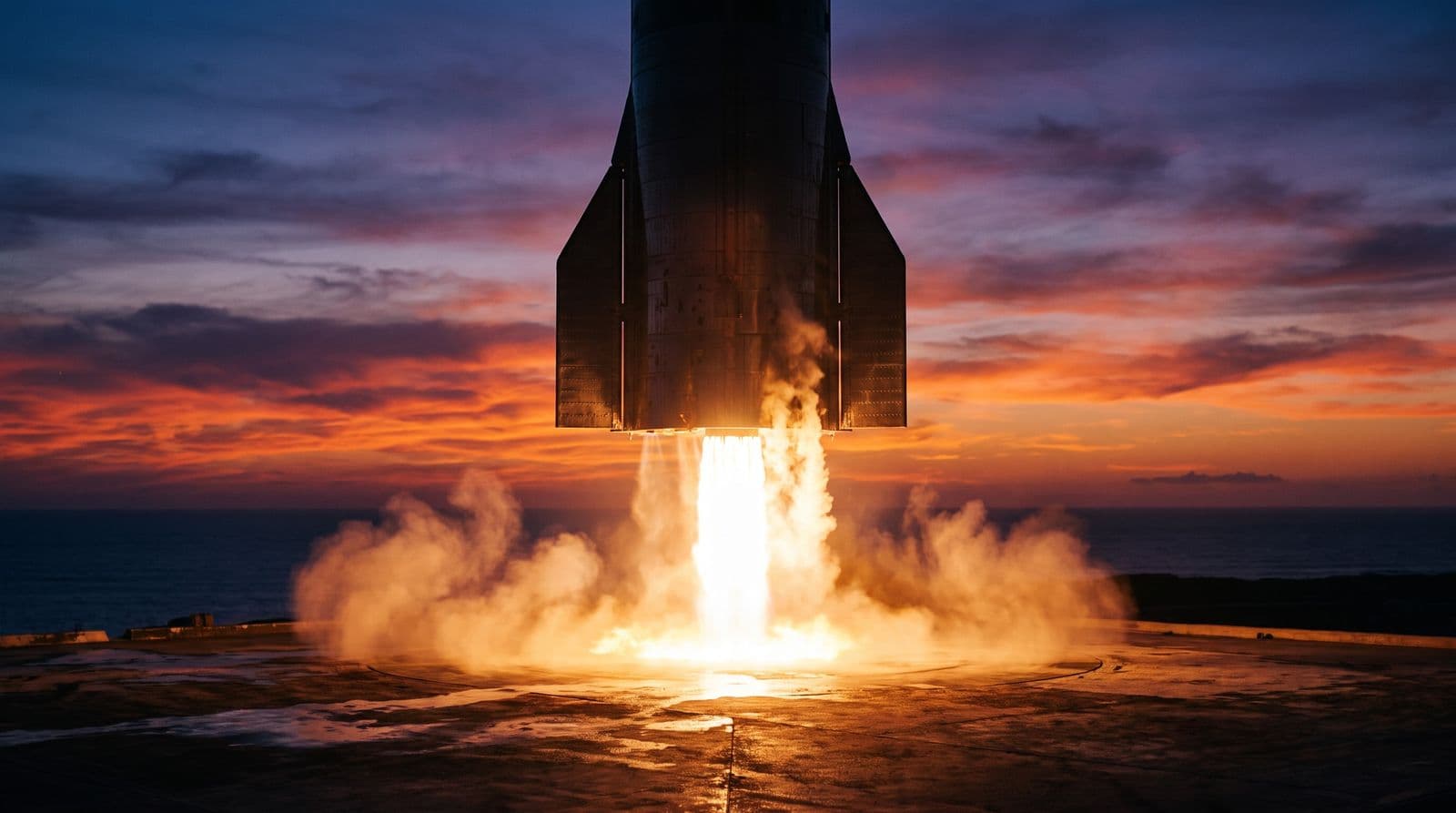
Getting people there takes a different kind of machine. It takes a ship large enough to carry crew and cargo across months of deep space, and an economic model that does not require a national budget for every trip. That is why reusability matters so much. A fully reusable rocket that can be refueled in orbit changes Mars from a once-in-a-lifetime flag planting into something closer to a shipping route, with departures every time the planets line up, roughly every two years.
The most elegant part of the plan is that Mars can help pay its own way. Its atmosphere is mostly carbon dioxide. Combine that with water from underground ice and a steady supply of power, and you can make methane and oxygen, which happen to be exactly the propellants a modern rocket needs for the trip home. Living off the land is the oldest strategy explorers have, and it works on Mars too.
Why go at all? The practical answer is that a civilization living on more than one planet is a more resilient one. Life on Earth is precious, and spreading it is a way of protecting it. But the deeper answer is about spirit. Big, difficult, unifying goals pull the best out of people. The moon landings inspired a generation of engineers and scientists who went on to build the modern world, and a journey to Mars could do the same for children who are sitting in classrooms right now.
There will be setbacks. There always are with anything worth doing. But the conversation has shifted from whether this is possible to how and when, and that shift alone is remarkable. Every generation gets one or two truly enormous projects. Ours might be learning to live on another world.
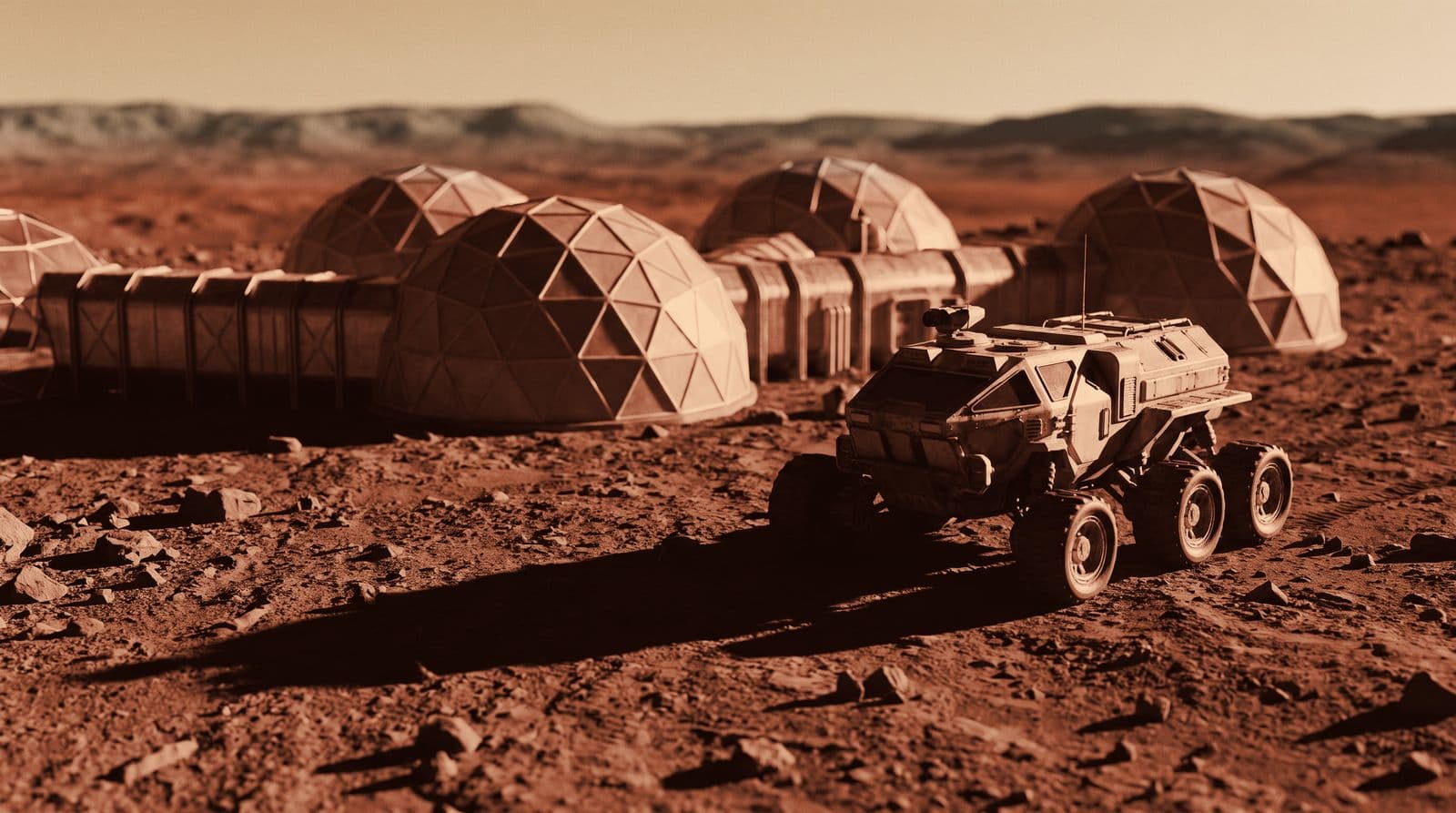
Life on Mars, at least at first, will look a lot like life at a research station in Antarctica. Small crews, sturdy habitats, greenhouses glowing under artificial light, and a schedule built around science and maintenance. Early settlers will be part scientist, part engineer, part farmer. Over time, though, the outposts could grow into towns, with workshops, schools, and the first people who can honestly say they were born somewhere other than Earth. It is a long road, but every great city began as a handful of brave people and a good reason to stay.
So the next time you spot that little red light in the evening sky, give it a nod. It is not just a planet anymore. It is an invitation.