For most of the internet age, a good connection depended on geography. If you lived in a city, fiber and cable ran past your door. If you lived on a ranch, a mountain, an island, or a boat, you were largely out of luck. Running cable to every remote home is enormously expensive, so for millions of people the information age arrived slowly, unreliably, or not at all.
Satellite internet existed, but the old approach had a stubborn problem. Traditional communications satellites sit in geostationary orbit, tens of thousands of kilometers above the equator, so they can hover over one spot. That height lets a single satellite cover a huge area, but it also means every signal has to make an extraordinarily long round trip. Video calls stuttered. Online games were nearly impossible. It worked, but it never felt like the real thing.
Connectivity used to depend on where you lived. Now it depends on whether you can see the sky.
— From "INTERNET FROM THE SKY"
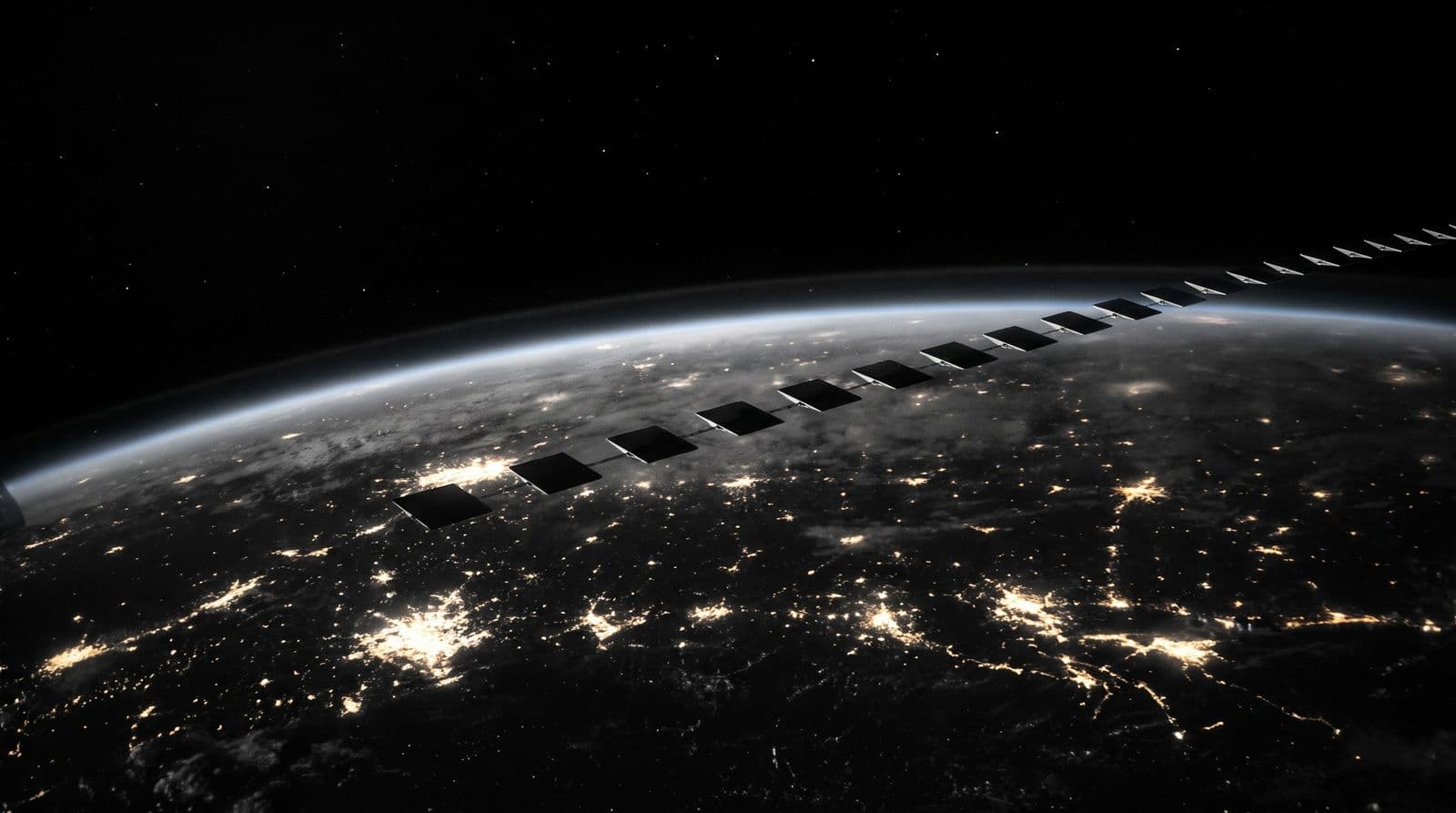
The breakthrough idea was to come down closer. Satellites in low Earth orbit circle only a few hundred kilometers up, which cuts the round trip dramatically and makes the connection feel snappy. The catch is that at that height each satellite moves quickly across the sky and can only see a small patch of the ground at a time. To provide continuous coverage, you need not a handful of satellites but thousands of them, working together as a constellation.
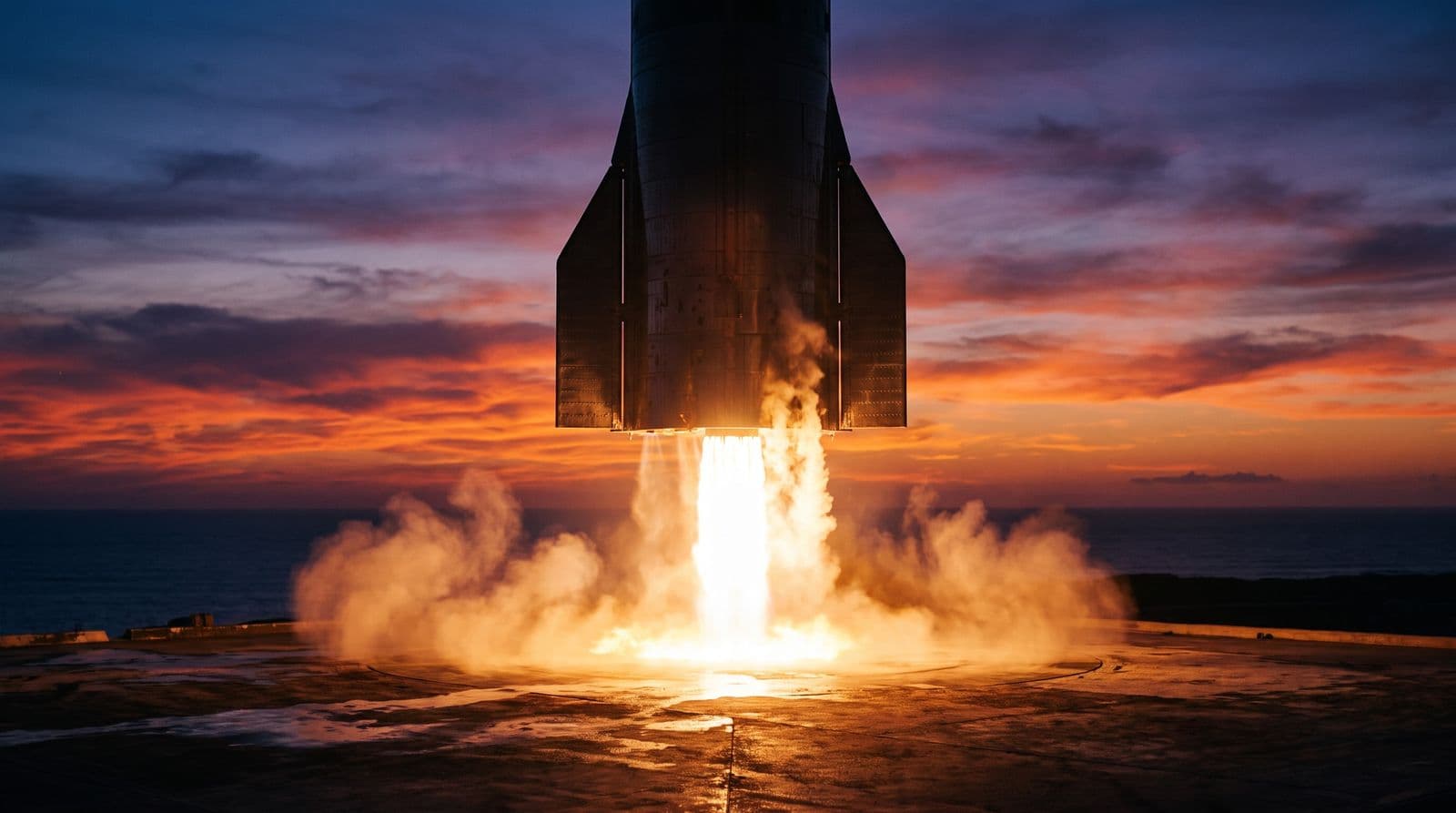
Building and launching that many satellites would have been unthinkable in the age of expendable rockets. Reusable boosters changed the arithmetic. Suddenly it became practical to launch satellites in large batches, again and again, steadily filling the sky with a mesh of small, capable spacecraft. Many of them now pass data between one another with lasers, relaying signals across oceans without ever touching the ground.
On the ground, the user terminal is a flat dish about the size of a pizza box that can steer its beam electronically, tracking satellites as they pass overhead without any moving parts aiming it around. Set it up in a clear spot and it simply finds the sky. Farmers use it to run modern operations. Families in the countryside use it for school and remote work. Ships, airplanes, and research stations at the ends of the earth use it to stay in touch.
Some of the most moving stories come from emergencies. When hurricanes, wildfires, or earthquakes knock out local infrastructure, a few terminals can restore communication for rescue teams and hospitals within hours. Connectivity that falls from the sky does not care whether the roads are washed out or the cell towers are down. In moments like that, a fast internet connection becomes something much more precious than entertainment.
Satellite constellations are now a busy and competitive field, with several companies and countries building their own networks. That competition is good news for everyone. The sky is big, the need is enormous, and the more good options people have to get online, the more of humanity gets to join the conversation.
There is also a wonderful symmetry in where this technology is headed. The same constellations that connect a farmhouse today are increasingly able to talk directly to ordinary phones, filling in the dead zones on a mountain road or a stretch of empty highway. The idea of being unreachable simply because you drove past the last cell tower may soon feel as old-fashioned as a paper road map. For hikers, sailors, truckers, and anyone who loves the wide open, that is a genuinely lovely thought.
Connectivity used to depend on where you lived. Increasingly, it depends only on whether you can see the sky. That is a quiet revolution, and it deserves a loud thank you.