Imagine flying across the country and then throwing the airplane away. Imagine every passenger ticket having to cover the cost of building an entirely new jet. That, more or less, was the economics of spaceflight for most of its history. Rockets were some of the most sophisticated machines humanity had ever made, and almost all of them ended their careers as debris at the bottom of the ocean after a few minutes of work.
The engineers who built them were not foolish. Landing a rocket is staggeringly hard. A booster is a tall, thin tube that has just been traveling many times the speed of sound, and it has to turn around, fall back through the atmosphere, relight its engines, and settle onto a small target as gently as a helicopter. For decades the sensible conclusion was that it was not worth trying. Expendable was simply how rockets worked.
Imagine flying across the country and then throwing the airplane away. That was spaceflight.
— From "STICKING THE LANDING"
Then a young company decided that sensible was not good enough. If the most expensive part of a launch is the vehicle itself, the reasoning went, then the vehicle has to come back. The early attempts were fiery and public. Some boosters tipped over. Some came down too fast. Each one taught the team something, and they shared the footage openly, explosions and all, which turned every test into a lesson the whole world could watch.
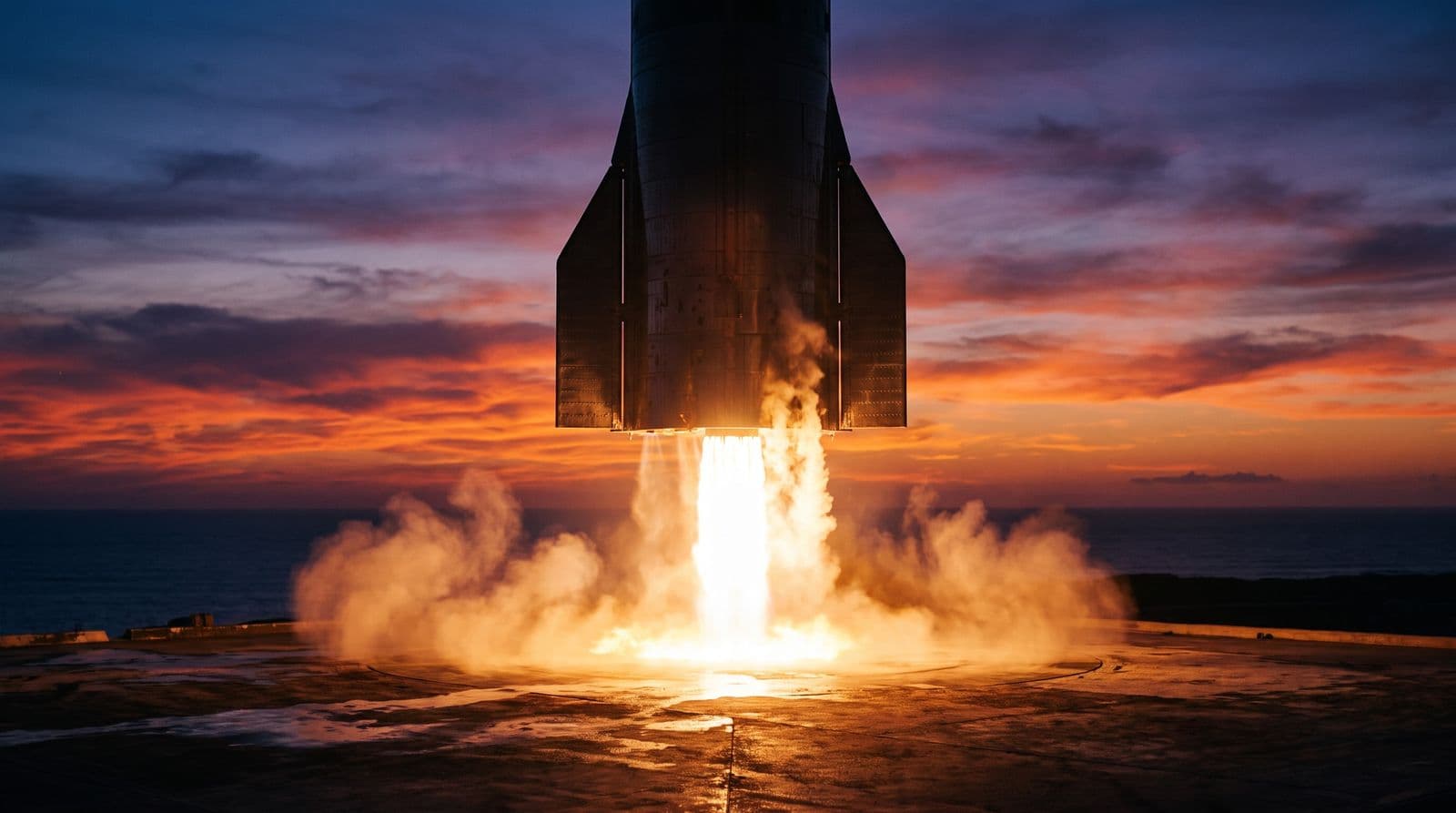
And then one night a booster came down out of the dark on a pillar of flame and stood upright on the landing pad. Not long after, another landed on a drone ship rocking in the open ocean. People who had spent their careers in aerospace watched the video and simply laughed with joy. It looked like something out of a 1950s science fiction poster, a rocket landing tail first the way we always imagined they should.
What followed was even more important than the first landing: the second flight, and the third, and the tenth. Boosters began to fly again and again, refurbished and relaunched with a rhythm that started to resemble an airline more than a space program. The cost of reaching orbit came down, and when access to space gets cheaper, everything that depends on it blossoms. More science, more satellites, more ideas that suddenly pencil out.
The next chapter is bolder still. The new generation of giant rockets is designed to be fully reusable, upper stage included. Instead of landing on legs, the enormous booster flies back to the launch tower, where a pair of mechanical arms, affectionately called the chopsticks, catch it in midair. The first time it worked, it looked impossible. Now it is a milestone on the road to rockets that land, refuel, and fly again in the same day.
There is a lesson here that reaches well beyond aerospace. Progress often hides behind a question nobody thinks to ask, because the answer seems so obvious. Why do we throw rockets away? Because that is how it is done. It took a team willing to ask again, to fail in public, and to keep going, to discover that the obvious answer was simply wrong.
Reusability also changed the culture of spaceflight. When hardware comes home, engineers can inspect it, learn from it, and improve it between flights. Wear patterns, heat marks, and sensor data all become feedback. The rocket stops being a single precious artifact and becomes a product that gets better with every mission, the same way cars and airplanes improved over generations. That steady loop of build, fly, learn, and fly again is how a frontier slowly turns into a neighborhood, and it is now happening in orbit.
So here is to the people who stuck the landing, and to everyone who cheered in the control room when they did. You made the sky a little closer for all of us.