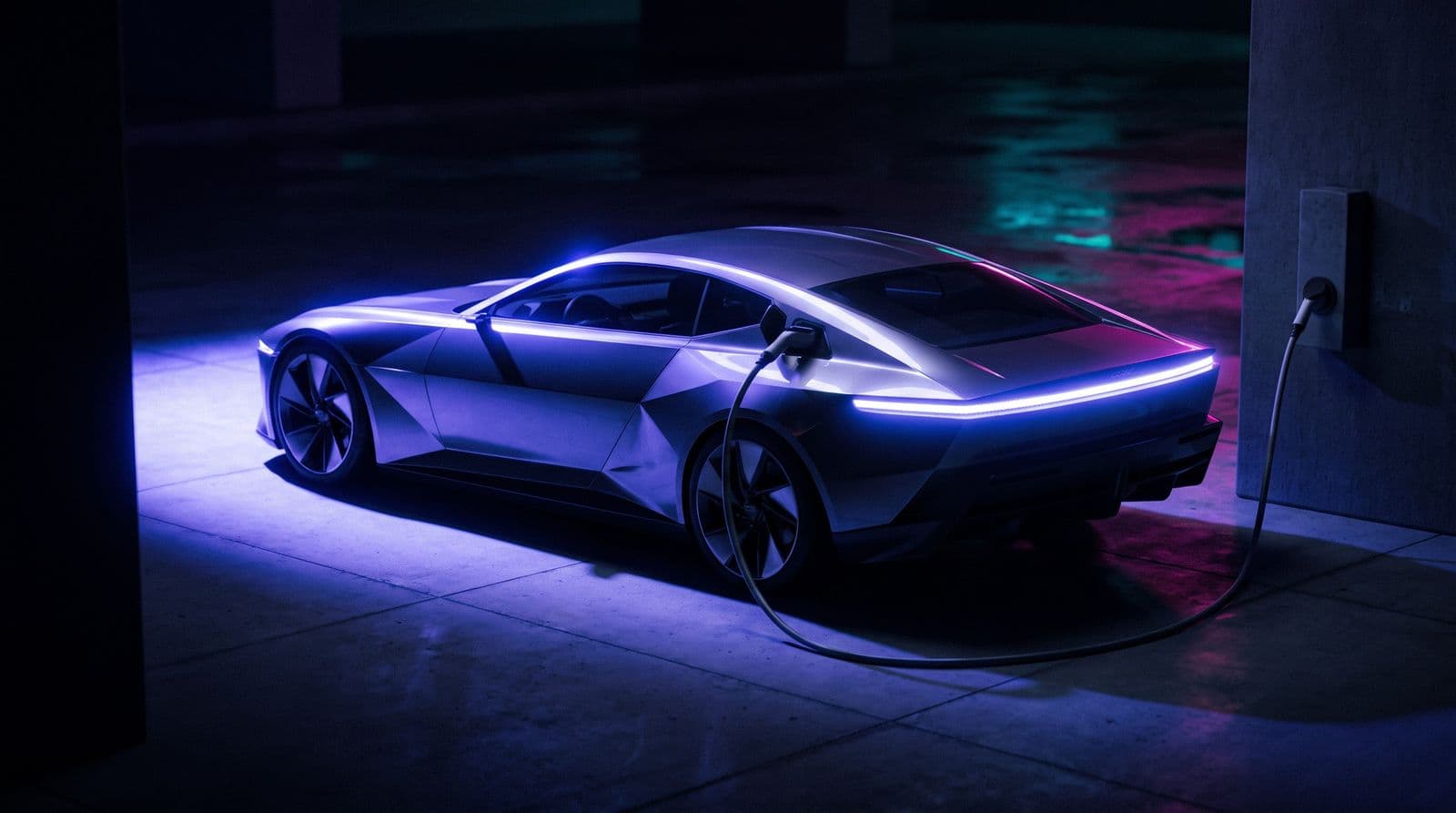
There is a small ritual that a growing number of drivers have quietly stopped performing. The detour on the way home, the squint at the price sign, the cold pump handle, the receipt nobody wanted. For more and more households that whole errand has simply evaporated. The car fills up overnight in the garage or the driveway, the same way a phone does on the nightstand, and the morning begins with a full charge that never required a trip anywhere.
It is easy to forget how improbable this once looked. Electric cars have existed for more than a century, but for most of that time they were curiosities: slow, short-legged, and styled as if they were apologizing for themselves. The idea that an electric car could be the car people actually wanted, the quick one, the beautiful one, the one with the waiting list, was treated as a fantasy by most of the industry. Then a small, stubborn company in California decided to start at the top, with a sports car, and work its way down.
The car fills up overnight, the way a phone does on the nightstand. The errand simply evaporated.
— From "THE LAST TRIP TO THE GAS STATION"
That sequencing was the quiet genius of it. Build something desirable first, prove the technology in public, and then use everything you learn to make the next car more affordable and the one after that more affordable still. It is a plan simple enough to fit on a napkin and hard enough to take decades. It asked people to fall in love with a future before that future was cheap, and a great many of them did.
What they discovered once they drove one was not a compromise. It was a better machine. Electric motors deliver their pull the instant you touch the pedal, so even a family sedan can feel like it has been shot from a slingshot. The cabin is hushed. There is no oil to change, no transmission to rebuild, and regenerative braking turns every slowdown into a little bit of recovered energy. And because so much of the car is software, it can arrive in your driveway one way and wake up a few months later with new features delivered over the air while you slept.
The most generous thing about that first wave of electric cars is what it did to everyone else. Today nearly every major automaker is building or developing electric models, battery factories are rising on several continents, and fast chargers are appearing along highways that once offered only diesel and gas. Competition is the sincerest compliment in industry, and the whole field has been pulled forward. Drivers win no matter which badge they choose.
The infrastructure story is just as hopeful. A home charger turns the garage into a fuel station. Pair it with rooftop solar and a home battery and a family can, on a sunny day, drive on sunlight they captured themselves. The grid gets smarter as cars learn to charge when demand is low. Even the old gas station is reinventing itself, becoming a place to grab a coffee and stretch your legs while a fast charger tops you up in the time it takes to finish the cup.
None of this happened by accident. It took engineers who refused to accept that batteries were too heavy, executives who bet their companies on it, and early owners who were willing to be pioneers. It took a belief that the cleaner option could also be the more exciting one. That belief turned out to be correct, and the result is a cleaner, quieter, quicker way to get where we are going.
So the next time you walk past your car in the morning and it is simply ready, take a second to appreciate how strange and wonderful that is. Somewhere a gas pump is waiting for a customer who is never coming back. Thank you very much.