Look around the room you are sitting in. The door handle sits at the height of a hand. The stairs are spaced for a human stride. The shelves, the counters, the light switches, the tools in the garage, all of it was designed around a body with two arms, two legs, and eyes at about head height. We built our entire world for one particular shape, and that turns out to be a very good argument for building helpers in that same shape.
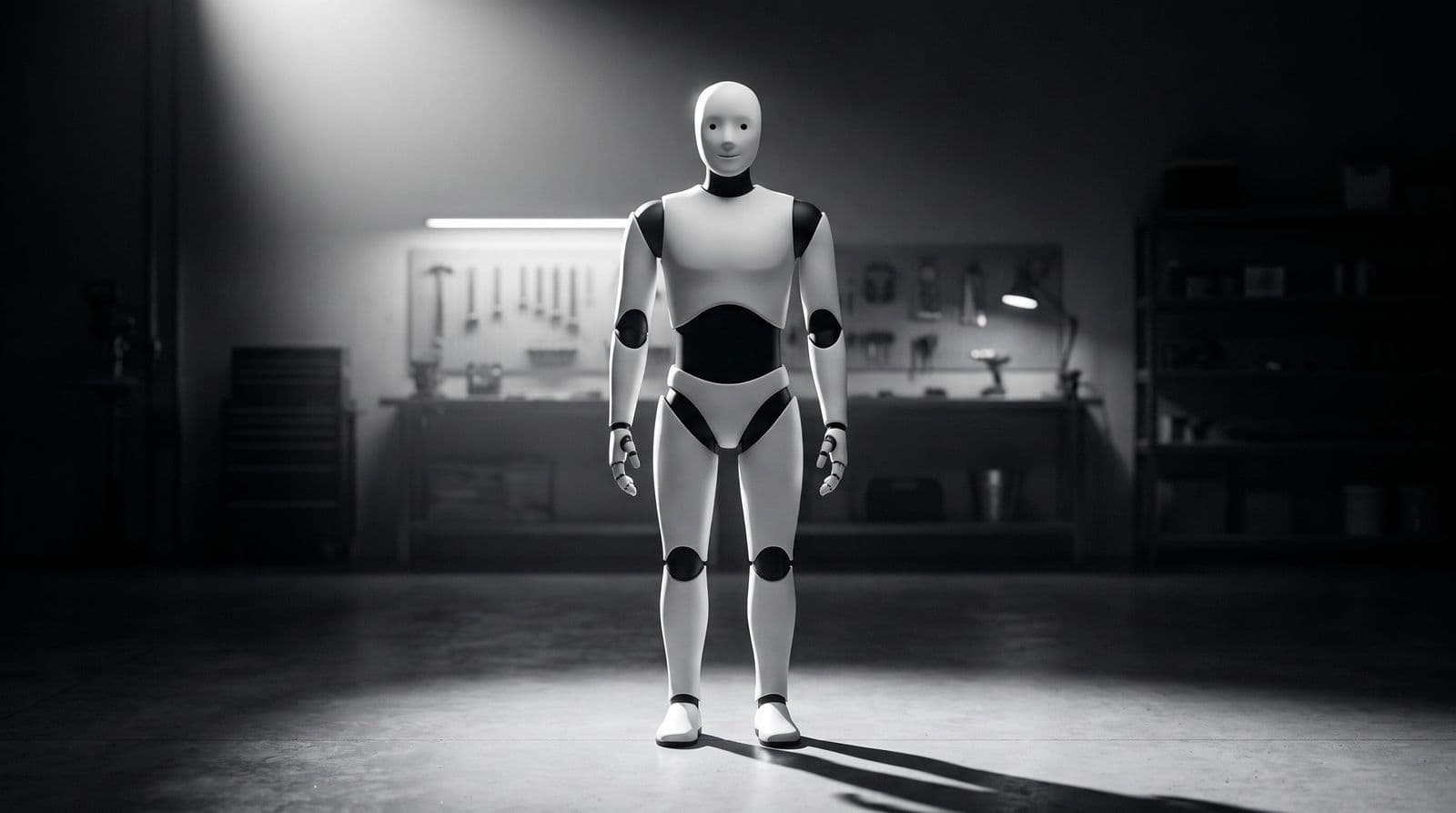
Specialized robots are already everywhere, welding car bodies and sorting packages in warehouses. They are superb at one job in one carefully arranged place. A humanoid robot aims for something different: general usefulness in spaces made for people. Instead of redesigning the factory or the kitchen around the machine, you design the machine to work in the factory and the kitchen as they already are.
Our world is built for two hands, two feet, and eyes at about head height. A helper shaped like us fits right in.
— From "HELLO, HELPER"
For a long time this was more dream than plan. Walking on two legs is a constant act of balance. Human hands are miracles of dexterity that can thread a needle or lift a box. And seeing the world well enough to act in it, recognizing a cup, judging how hard to grip it, noticing that it is full, demanded a kind of intelligence that machines simply did not have.
What changed is that several technologies matured at the same time. Batteries and electric motors grew more powerful and compact, largely thanks to the electric car industry. Cameras and chips became cheap and capable. And artificial intelligence learned to understand images and to learn skills from examples, so a robot can be shown how to fold a shirt rather than programmed line by line. Put those pieces together and the humanoid robot moves from science fiction toward the workbench.
Several companies are now building humanoid robots in earnest, including efforts from carmakers that already know how to manufacture complex machines at scale. That last part matters enormously. A remarkable prototype is one thing; a helpful robot that ordinary businesses and eventually households can afford is something else entirely, and it requires the same mass-production know-how that made cars and phones accessible to almost everyone.
The most exciting promise is in the jobs nobody wants. The work that is dull, dirty, or dangerous, the heavy lifting, the repetitive sorting, the shifts in extreme heat or cold, could increasingly be handed to machines, freeing people for work that is more creative, more social, and more rewarding. Further out, there is a gentle vision of robots that help an aging parent stay independent at home a little longer, carrying the groceries and fetching the things on the high shelf.
Getting there will take patience, careful safety engineering, and plenty of learning in real environments. But the direction is wonderfully hopeful: a future where physical work becomes abundant, where the things we need cost less to make, and where more of our hours go to the things only people can do.
Part of the charm is how relatable these machines are. A humanoid robot that picks up a dropped tool, opens a door, or carefully hands an object to a person is doing something we instantly understand. That familiarity makes it easier to imagine working alongside them, and easier for the robots to learn from us, because the examples they study are human examples. Every demonstration of a person doing a task well becomes a lesson a robot can someday absorb.
So say hello to the helper. It might be a while before one is folding your laundry, but when it does, it will fit right into the world we built.