Think about how much of your life you have spent behind the wheel. The commute, the school run, the long highway stretch on the way to see family, the circling for a parking space. Now imagine getting that time back. You could read, call a friend, close your eyes, or simply watch the scenery like a passenger on a train. That is the first and most obvious gift of self-driving cars, and it is a big one.
The second gift is quieter but even more important. The vast majority of road crashes involve human error: distraction, fatigue, impairment, a split second of misjudgment. A well-designed autonomous system does not text, does not get drowsy, and never has one too many. It watches in every direction at once, all the time. The promise of autonomy is not only convenience. It is the chance to make the roads dramatically safer for everyone on them.
A human driver learns from one lifetime behind the wheel. A fleet learns from all of them at once.
— From "THE CAR THAT DRIVES YOU HOME"
Teaching a car to drive is one of the hardest problems in modern engineering. The road is messy and full of surprises: a ball rolling into the street, a cyclist signaling with a hand, a construction worker waving traffic through. Different companies have taken different approaches, some relying on a rich mix of sensors, others betting that cameras and powerful neural networks, much like human eyes and a human brain, can learn to handle it all.
What makes the modern approach so exciting is the way it learns. A human driver learns from a single lifetime of experience. A fleet of connected cars can learn from all of its drivers at once, gathering examples of rare and tricky situations and folding those lessons back into the software. Improvements then arrive through over-the-air updates, so the whole fleet can get a little better at once.
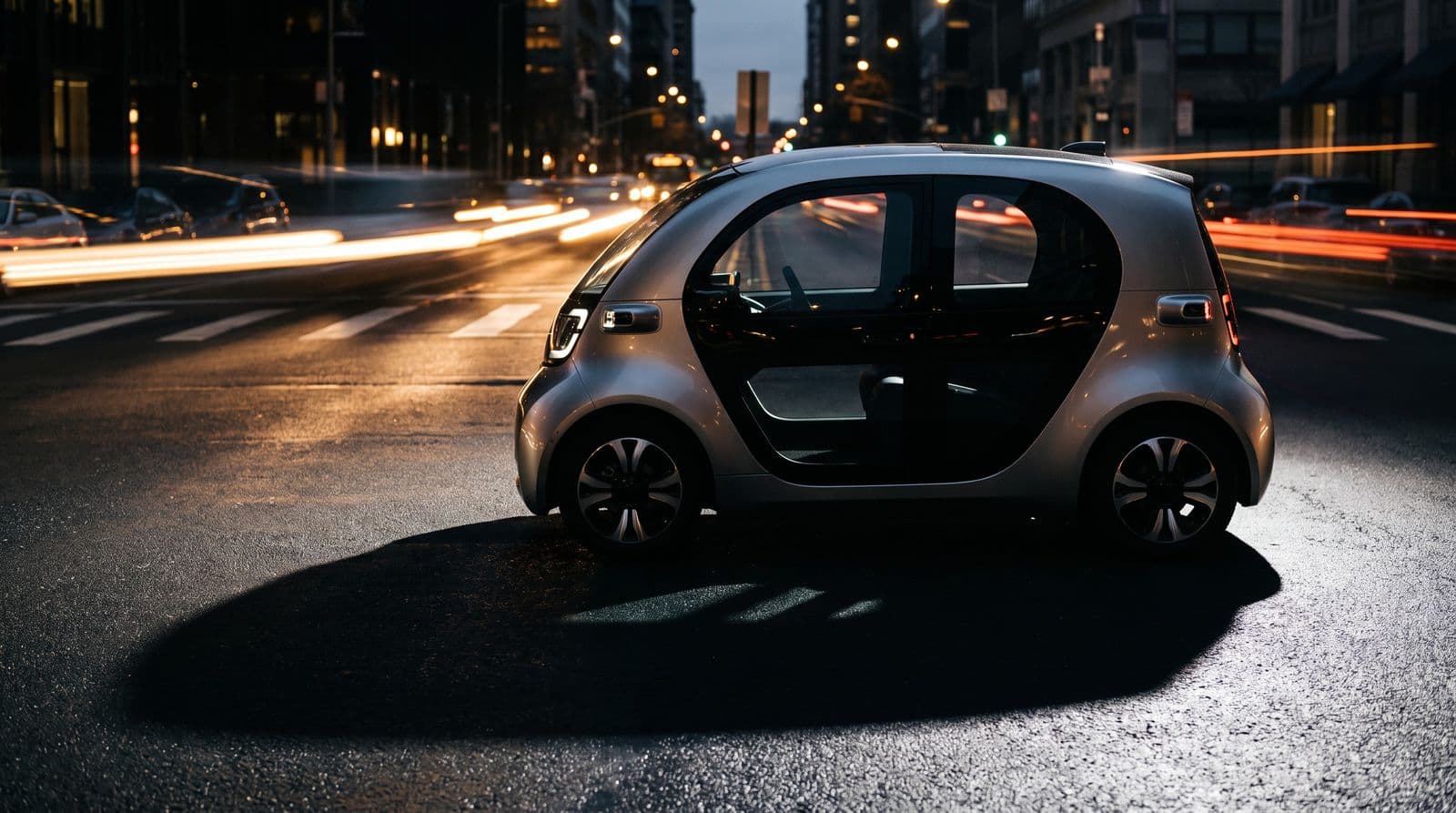
And the future is already pulling up to the curb. Driverless ride services are carrying paying passengers in a growing number of cities, and riders often describe the experience the same way: a few minutes of nervous excitement, then something that feels surprisingly ordinary. That shift from astonishing to everyday is exactly what progress looks like.
The wider benefits could reshape our communities. Autonomy can offer independence to people who cannot drive, older adults, people with visual impairments, and others who depend on someone else for a ride. A shared fleet of robotaxis could mean fewer cars sitting idle, and fewer parking lots swallowing up city blocks. Some of that pavement could become parks, housing, and places to gather.
There is still careful work ahead, from proving safety in every kind of weather to earning public trust one ride at a time. That is exactly as it should be. The goal is not just a car that drives itself, but one that drives better than we ever could.
There is a gentle side to this future that is easy to miss. A teenager could get home safely from a late shift without anyone waiting up to drive. A grandparent who gave up the car keys could still make it to lunch with friends every week. A tired parent could sleep through the last hour of a long road trip. Autonomy is often described in terms of technology, but its real measure will be all the ordinary moments it quietly makes easier and safer.
So here is to the engineers teaching cars to see, and to the day when the drive home becomes the best part of the evening. We will happily let someone else take the wheel.