Cities figured out a long time ago that they could grow upward. Skyscrapers stack offices and apartments dozens of stories into the air, and elevators carry people between them in seconds. But the roads that serve all those towers are stubbornly flat. Every car, bus, and delivery van shares a single layer of pavement, and when that layer fills up, everyone waits.
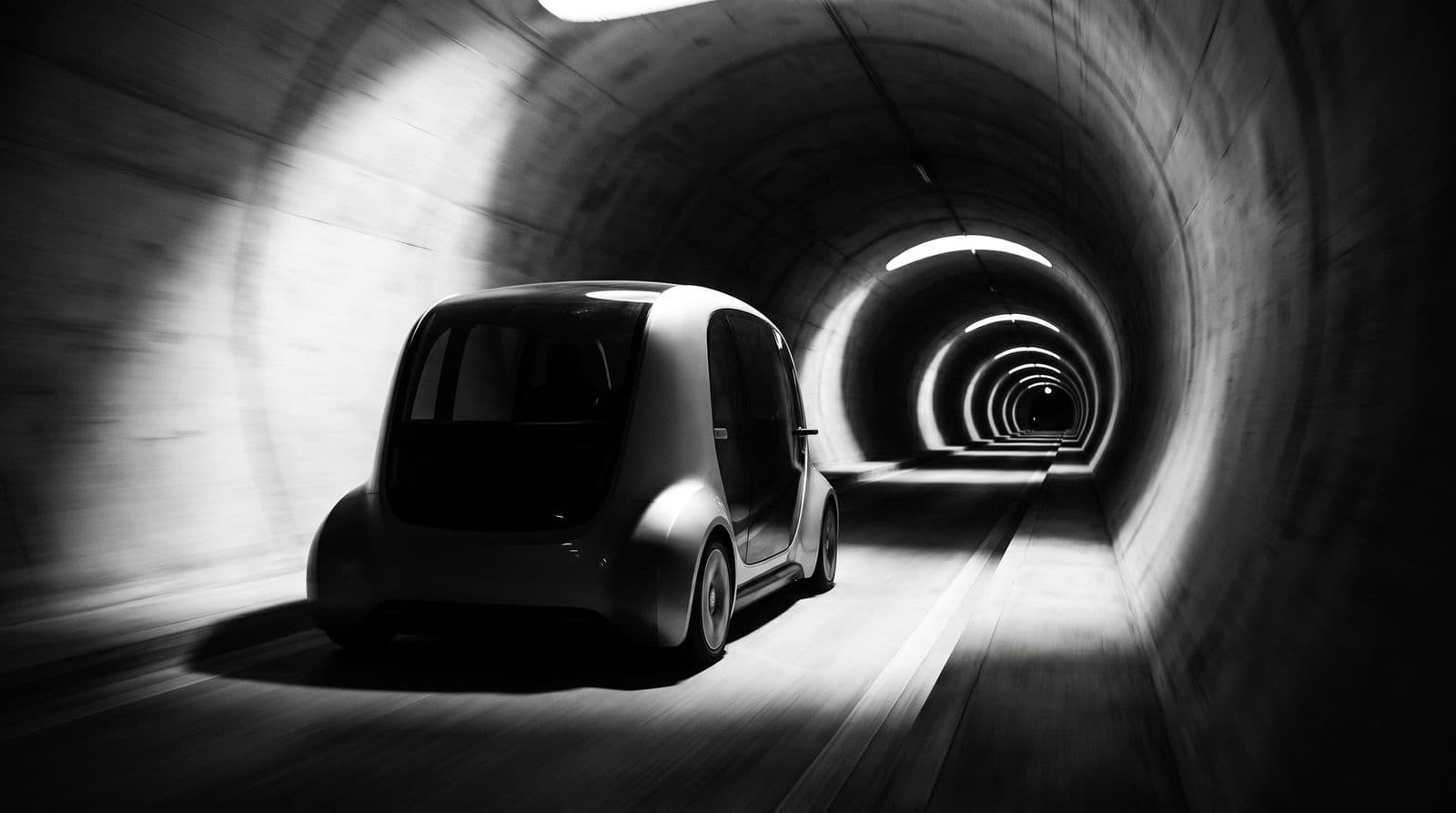
That is the insight behind the modern push for tunnels. Traffic is fundamentally a two-dimensional problem, and the obvious way to solve a two-dimensional problem is to add a third dimension. Flying is one way to do it. Going underground is another, and it has some lovely advantages. Tunnels are weatherproof, quiet, and invisible. You can stack them in layers, and they do not cast a shadow over anyone’s backyard.
We learned to build cities upward a century ago. The next frontier is building them downward.
— From "THE CITY HAS A BASEMENT"
The challenge has always been cost and speed. Traditional tunneling projects can take years and cost enormous sums for every mile, which is why most cities only attempt them for the biggest subway lines. The bold question was whether tunneling itself could be reinvented the way rockets and cars had been. Could the machines dig faster? Could the tunnels be smaller and simpler? Could the whole process be treated like a manufacturing problem rather than a one-off construction megaproject?
A tunnel boring machine is already a marvel: a rotating cutter head at the front, a conveyor carrying away the earth, and a crew installing the curved concrete segments that line the walls as it inches forward. The new thinking focuses on keeping that machine moving continuously, shrinking the tunnel diameter to fit vehicles rather than trains, and electrifying everything so there are no exhaust fumes to ventilate. Even the excavated dirt has been put to good use, pressed into bricks instead of hauled away as waste.
The results are already visible in places. Beneath the convention center in Las Vegas, a loop of tunnels carries visitors in electric cars from one hall to another in moments, a trip that would otherwise be a long walk. It is a modest beginning, but it is a working one, and working systems teach lessons that renderings never can.
The bigger vision is a city where the surface is given back to people. Imagine streets with more trees and wider sidewalks, cafés spilling into space that used to be parking, and the heavy flow of traffic humming quietly in the layers below. Tunnels could carry cars, freight, and utilities, freeing the street level to be what the best streets have always been: places to gather.
Like every ambitious idea, this one will be refined by real-world experience, by engineers and city planners and the people who ride it every day. That is how good infrastructure has always been built. What matters is that someone was willing to look at a traffic jam and see not a fact of life, but a design problem waiting for a better answer.
Underground transport has a proud history, of course. Great subway systems have been carrying commuters beneath their cities for well over a century, and they remain some of the most beloved pieces of public infrastructure on earth. The new wave of tunneling is not a rejection of that legacy. It is an extension of it, an attempt to make digging so much cheaper and faster that cities can say yes to many more tunnels, for many more purposes, in many more places.
We learned to build cities upward a century ago. The next frontier is building them downward. The basement, it turns out, has plenty of room.